



Bench Press Form: A Step-by-Step Guide to Benching Right
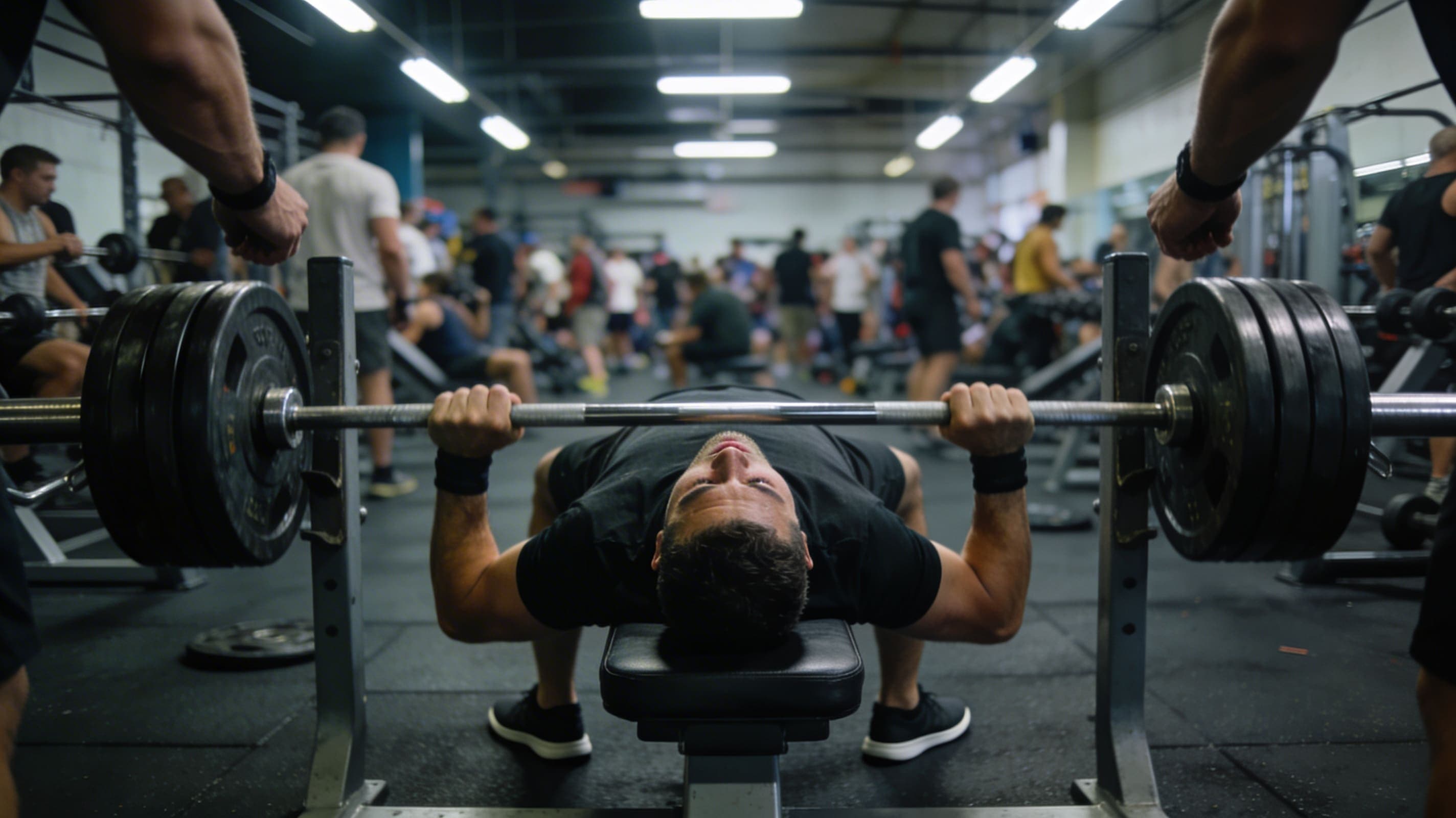
The bench press is the king of upper-body lifts. It lets you move the most weight with your chest, triceps and front delts. It is also one of the most butchered exercises in any gym: elbows flared, bar bouncing off the chest, hips flying off the bench. This guide breaks down proper bench press form step by step, the muscles it works, the best variations and how to program your bench so it keeps going up.
Bench Press Muscles Worked
The bench press is a compound horizontal push. It moves both the shoulder and elbow joints, which brings several muscles into play.
| Muscle | Role | How to emphasize it |
|---|---|---|
| Pectoralis major | Prime mover, brings the arms toward the midline | Medium to wide grip, flat bench |
| Upper chest (clavicular head) | Pushes up and forward | Incline bench at about 30° |
| Triceps | Lock out the elbows at the top | Closer grip |
| Front delts | Assist the press | Incline bench |
| Lats, traps, rhomboids | Stabilize the shoulder blades and control the descent | Active scapular retraction |
Grip width and bench angle shift the work a little, but no variation fully isolates one area. That is exactly why the bench press is so effective for overall upper-body strength.
How to Bench Press: Step-by-Step Form
1. Set Up on the Bench
- Lie down with your eyes directly under the bar.
- Feet flat on the floor, slightly behind your knees, a bit wider than hip width.
- Glutes, upper back and head stay in contact with the bench for the whole set.
2. Grip the Bar
- Width: usually about 1.5 times shoulder width. At the bottom, your forearms should look roughly vertical from the front.
- The bar sits low in your palm, over the forearm bone, with your wrists stacked rather than bent back.
- Wrap your thumbs around the bar. A thumbless "suicide grip" can let the bar roll out of your hands.
3. Pinch Your Shoulder Blades
This is the single most important cue for healthy shoulders. Before unracking, squeeze your shoulder blades together and pull them down, as if tucking them into your back pockets. Your chest rises and a slight arch appears naturally. Hold that position from the first rep to the last.
4. Lower the Bar
- Unrack with straight arms and bring the bar over your shoulders.
- Take a big breath and brace.
- Lower the bar in about two seconds, under control, toward your lower chest (around nipple line or just above).
- Keep your elbows at a 45 to 70° angle from your torso: not glued to your sides, not flared to 90°.
5. Press
- Touch your chest without bouncing.
- Drive your feet into the floor and press the bar up and slightly back toward your shoulders.
- Exhale near the top or through the hardest part of the rep.
- Lock out without letting your shoulder blades relax.
Safety First
Always use the safety arms in a rack, or the bench's safety catches, set just below chest height. If you are going heavy, ask for a spotter. If you train alone with no safeties, skip the collars so you can tilt the bar and dump the plates if you fail a rep.
Breathing and Leg Drive: The Hidden Strength
Two details separate a shaky bench from a solid one, and most beginners ignore both.
Breathing
Take a big breath at the top before each rep, hold it while you lower the bar and through the hardest part of the press, then exhale near lockout. That held breath pressurizes your torso, keeps your chest high and gives the bar a stable platform. On sets of 10 or more reps, you can take a quick breath at the top between reps rather than on every single one.
Leg Drive
Your legs do not push the bar, but they stabilize your whole body. Before you unrack, push your feet into the floor as if you were trying to slide yourself toward the head of the bench, without lifting your glutes. You should feel your quads and glutes tighten and your upper back press into the pad. Hold that tension for the whole set. Most lifters find they gain a few pounds just by learning to use their legs properly.
Common Bench Press Mistakes
| Mistake | What it causes | Fix |
|---|---|---|
| Elbows flared to 90° | High stress on the front of the shoulder | Tuck elbows to 45-70° |
| Loose shoulder blades | Unstable shoulders, lost strength | Pinch and depress the blades before unracking |
| Bouncing off the chest | Less muscle work, sternum stress | Controlled touch, no rebound |
| Hips lifting off the bench | Shorter range, lower-back stress | Move feet forward slightly, lower the weight |
| Bent-back wrists | Wrist pain | Bar low in the palm, wrists stacked |
| Partial reps | Limited strength and size gains | Lower the bar all the way to your chest |
Your First Bench Press Sessions
If you have never benched before, do not jump straight to a 45 lb Olympic bar loaded with plates. Follow this three-step progression instead:
- Weeks 1-2: push-ups (from the knees if needed) and light dumbbell bench press, 3 x 10-12. You learn to pinch your shoulder blades and control the descent.
- Weeks 3-4: empty barbell or a light fixed bar, 3 x 10. Focus on bar path and touching your chest.
- Week 5 onward: add 5 lb per week as long as every set stays clean, staying in the 6-10 rep range.
To find your first working weight, pick a load you can lift 12 times with three reps left in the tank. It is deliberately conservative: week one is for learning, not testing. Most beginners can then add weight every week for several months.
How Many Sets of Bench Press per Week?
For your chest, a beginner progresses well with 8 to 12 sets per week across all pressing movements. For example: 3 sets of barbell bench on Monday, 3 sets of incline dumbbell press on Thursday, and 2 to 3 sets of push-ups or dips as accessories. There is no need for five bench variations in the same workout.
Bench Press and Shoulder Pain: Prevention
Shoulder discomfort is the most common complaint among people who bench. It rarely comes from the exercise itself and almost always from how it is performed.
- Keep your shoulder blades pinched: a shoulder blade that rolls forward at the bottom puts the joint in a vulnerable position.
- Tuck your elbows: going from 90° to about 60° greatly reduces stress on the front of the shoulder with no loss of chest work.
- Balance pushing and pulling: do at least as many sets of rows and pulldowns as presses each week.
- Warm up your rotator cuff: two sets of band external rotations and face pulls before you bench.
- Change the tool: if the barbell bothers you, dumbbells with a neutral grip (palms facing) are often much better tolerated.
Sharp pain, pain that lasts several days or pain that radiates down the arm is not normal. Stop the exercise and see a healthcare professional.
Bench Press Variations
Dumbbell Bench Press
Deeper range of motion, independent work for each arm and a free path for the shoulders. Great for beginners, for fixing imbalances and for sensitive shoulders. Expect to lift a bit less than with a barbell.
Incline Bench Press
Bench set between 15 and 30°. Shifts more work to the upper chest and front delts. Above 45°, it becomes more of a shoulder press.
Close-Grip Bench Press
Hands about shoulder width apart. The triceps work harder, which makes it a great accessory for fixing a weak lockout.
Machine or Smith Machine Press
A guided path that helps you learn the movement or finish a session safely close to failure. Less work for the stabilizers.
Push-Ups
The bodyweight version. Weighted or feet-elevated, they remain a great accessory even for experienced lifters. You can find all of these variations, with coaching cues, in our exercise database.
How to Program the Bench Press
Sets, Reps and Frequency
Bench one to three times per week depending on your level. These are the most common ranges by goal:
| Goal | Sets | Reps | Intensity (% of 1RM) | Rest |
|---|---|---|---|---|
| Strength | 3-5 | 3-6 | 80-90% | 3-4 min |
| Muscle growth | 3-4 | 6-12 | 65-80% | 2-3 min |
| Technique / endurance | 2-3 | 12-15 | 55-65% | 90 sec |
To set your working weights without testing a true max, estimate your one-rep max with the mebody workout tracker using a set of 3 to 10 reps. It is safer and accurate enough for programming.
Sample 6-Week Progression (Muscle Growth)
- Week 1: 3 x 8 at 70% of your estimated 1RM.
- Week 2: 3 x 9 with the same weight.
- Week 3: 3 x 10 with the same weight.
- Week 4: +5 lb, back to 3 x 8.
- Week 5: 3 x 9.
- Week 6: deload, 2 x 8 at about 60%.
That is progressive overload in action: add reps first, then weight.
How to Break a Bench Press Plateau
After a few months, progress slows. Before you change everything, check these levers:
- Technique: film yourself from the side. A J-shaped bar path (back toward the shoulders on the way up) and shoulder blades that stay pinched are often worth several pounds.
- Frequency: going from one to two bench sessions per week often restarts progress.
- Triceps work: if you stall near lockout, add close-grip bench or dips.
- Back work: rows and pull-ups strengthen the base you press from.
- Recovery: sleep, calories and protein. In a calorie deficit, holding your strength is already a win.
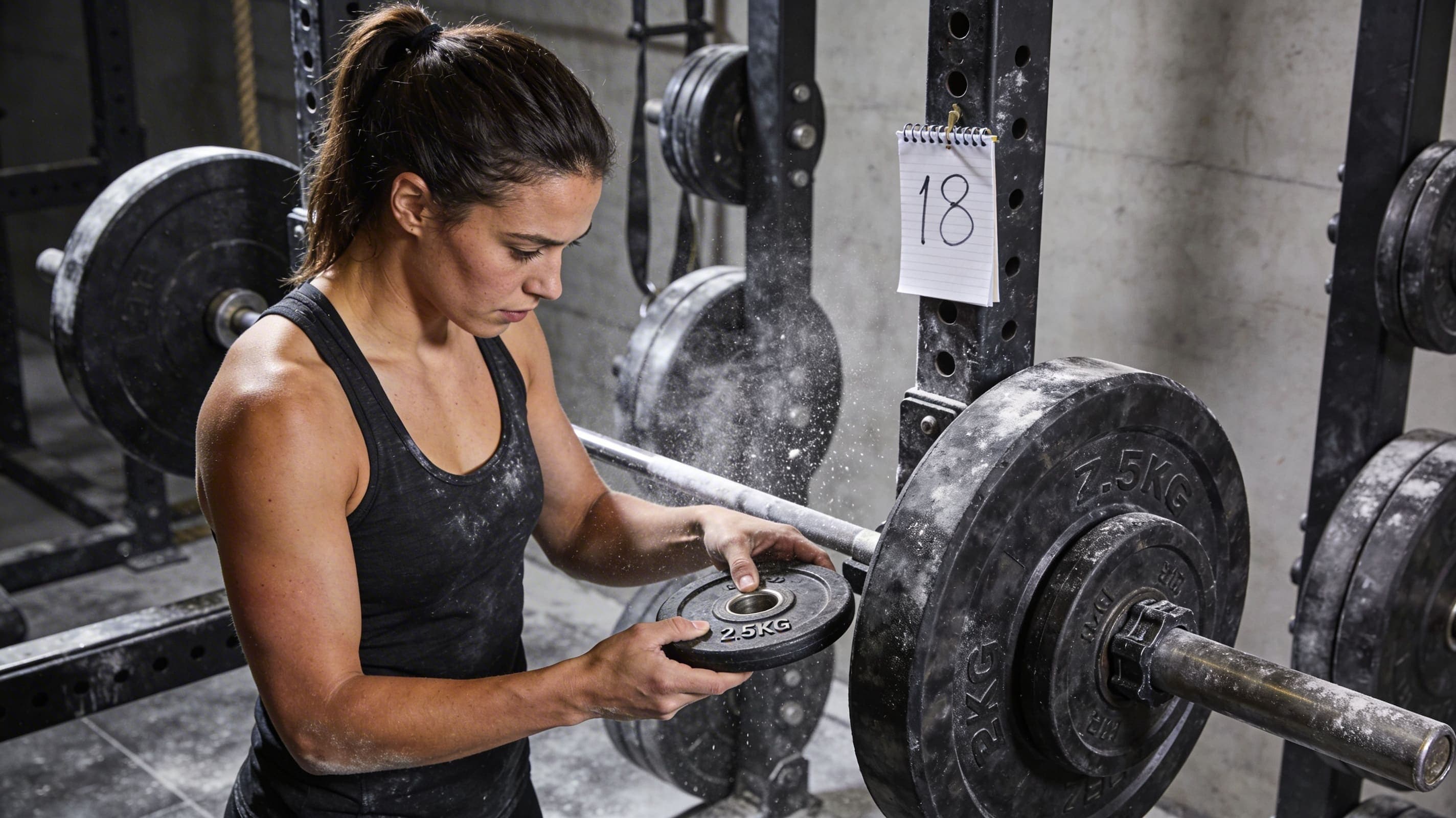
- Microplates: if a 5 lb jump is too much, add 2 to 2.5 lb using fractional plates.
Sample Warm-Up Before a Heavy Set
Example for working sets at 185 lb:
- Empty bar: 2 x 10, after a few shoulder circles and band pull-aparts.
- 95 lb x 8
- 125 lb x 5
- 150 lb x 3
- 170 lb x 1
- Working sets at 185 lb.
The idea is to ramp up while cutting reps, so you arrive warm but not tired.
Fitting the Bench Press Into Your Week
Put the bench press early in your session, when you are freshest. Pair it with a pulling movement (rows, pulldowns) to keep the front and back of your shoulders balanced. A simple rule: at least as many pulling sets as pushing sets over the week.
To track your bench press session after session, mebody logs every set, calculates your estimated 1RM and flags your personal records and plateaus. You can generate a workout plan that builds the bench press in at your level, or import the program you already follow as text or a PDF. The 14-day Pro trial is free.
Key Takeaways
- Shoulder blades pinched and down, feet planted, glutes on the bench.
- Elbows at 45-70°, bar to the lower chest, touch without bouncing.
- 6 to 12 reps for muscle growth, 3 to 6 for strength.
- Progress with reps, then weight, and deload every 4 to 6 weeks.
- Always use safeties or a spotter on heavy sets.
Ready to progress?
mebody adapts your program in real time based on your performance — no more generic plans.