




How Many Reps to Build Muscle? Finding Your Best Rep Range for Hypertrophy

How many reps to build muscle is one of the most common questions in the gym, and the classic answer, "8 to 12 reps for hypertrophy," is only part of the story. The research is clear: you can build muscle across a surprisingly wide range, from roughly 5 to 30 reps per set, as long as each set is hard enough. This guide breaks down the best rep ranges for hypertrophy, how close to failure you should train, how many reps to do on each type of exercise, and how to keep progressing week after week.
What actually drives muscle hypertrophy
Before you pick a rep range, it helps to know what makes a muscle grow. Three factors matter most:
- Mechanical tension: the primary signal. Your muscle fibers need to produce high force through a full range of motion.
- Effort: the fibers with the most growth potential (fast-twitch fibers) are only fully recruited when a set gets hard. The last few reps before failure do the heavy lifting.
- Weekly volume: the total number of hard sets per muscle per week. Over months, this is what separates good results from great ones.
Reps are simply a tool for creating tension and effort. Meta-analyses led by Brad Schoenfeld and colleagues have repeatedly shown that when sets are taken close to failure, light loads (high reps) and heavy loads (low reps) lead to similar muscle growth. Heavy loads, however, build more maximal strength.
The best rep ranges for hypertrophy
Here's how the main rep ranges compare and what each one gives you:
| Rep range | Reps per set | Approx. % of 1RM | Main benefit |
|---|---|---|---|
| Strength | 1 to 5 | 85 to 100% | Max strength, moderate growth per set |
| Heavy hypertrophy | 6 to 8 | 78 to 85% | Strength + size, great for compound lifts |
| Classic hypertrophy | 8 to 12 | 70 to 78% | Best balance of stimulus and fatigue |
| Metabolic hypertrophy | 12 to 20 | 60 to 70% | Size + muscular endurance, ideal for isolation |
| High-rep sets | 20 to 30 | 40 to 60% | Growth if close to failure, but very taxing |
For most people, the sweet spot is 6 to 15 reps. Below 5 reps, you need a lot of sets to accumulate enough volume, and your joints take more of a beating. Above 20 reps, cardiovascular fatigue and the burn often make you quit before the muscle is truly exhausted.
Why 8 to 12 reps is still a great starting point
There's nothing magic about 8 to 12, but it's practical. The weight is heavy enough to create high tension, light enough to keep your form clean, and each set lasts about 30 to 50 seconds. For beginners, it's the ideal range to learn the lifts while building muscle.
Where heavy sets (5 to 8 reps) fit in
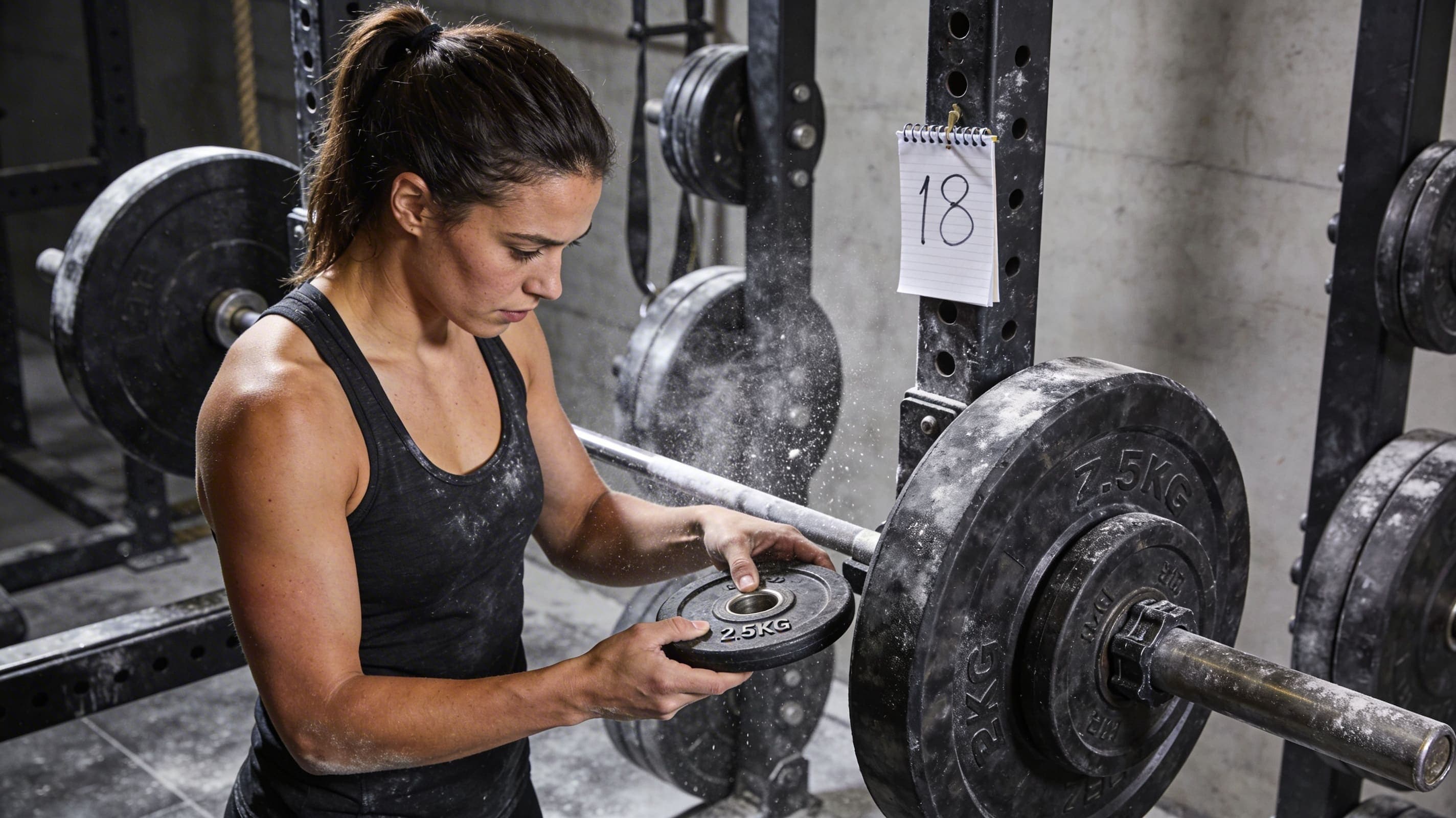
Training heavy on squats, bench press and rows builds strength, and that strength lets you use heavier weights in your higher rep ranges later. It's a positive feedback loop. To choose your working weights, start from an estimated max from the mebody workout tracker instead of testing a true max.
Reps matter less than how close you get to failure
This is the most important point in this article. Doing 12 reps with a weight you could lift 25 times creates almost no growth stimulus. Doing 12 reps with a weight you could only lift 13 or 14 times is extremely effective.
To measure effort, lifters use RIR (Reps In Reserve): how many more reps you could have done at the end of a set.
- RIR 0: muscular failure, no more reps possible.
- RIR 1-2: the sweet spot for most hypertrophy sets.
- RIR 3-4: warm-up sets or lighter weeks.
- RIR 5+: too easy to drive progress in trained lifters.
Should you train to failure?
Not on every set. Going to absolute failure dramatically increases fatigue (both neural and joint stress) for only a small extra growth benefit compared with stopping one rep short. A smarter approach:
- On big compound lifts (squat, deadlift, bench press): stay at RIR 1-3.
- On machines and cable exercises: you can hit RIR 0-1 on your last set.
- On isolation work (curls, lateral raises, triceps extensions): occasional failure is safe and useful.
Learning to judge your RIR
Beginners almost always underestimate how many reps they have left. A simple calibration drill: every 3 to 4 weeks, take one set of a safe exercise (leg press, machine chest press) to true failure and compare it with your guess. You'll often find that your "only 2 left" was really 5 or 6.
How many reps per exercise: a practical chart
Not every exercise suits every rep range. Heavy, technical lifts don't tolerate very long sets well (form breaks down under fatigue), while small muscles respond great to higher reps.
| Exercise type | Examples | Recommended reps | Target RIR |
|---|---|---|---|
| Heavy compounds | Squat, deadlift, bench press | 5 to 10 | 1 to 3 |
| Secondary compounds | Lunges, barbell rows, incline dumbbell press, pull-ups | 8 to 12 | 1 to 2 |
| Machines and cables | Leg press, lat pulldown, pec deck | 10 to 15 | 0 to 2 |
| Small-muscle isolation | Curls, triceps extensions, lateral raises | 12 to 20 | 0 to 1 |
| Calves, abs, forearms | Calf raises, cable crunches | 12 to 25 | 0 to 1 |
Need the right movements for each muscle? The mebody exercise database covers technique for more than 1,500 exercises.
Reps, sets and weekly volume
Reps per set only make sense alongside the number of sets. For hypertrophy, the usual guidelines are:
- 3 to 4 sets per exercise, rarely more.
- 10 to 20 hard sets per muscle per week for intermediate lifters.
- That volume spread over 2 sessions per muscle per week rather than one.
For the full breakdown, read our guide on how many sets per week you need to build muscle.
Time under tension: useful, but don't count seconds
Time under tension was long sold as the secret to hypertrophy. In reality, it matters mostly through mechanical tension. Control the lowering phase (2 to 3 seconds), lift with intent, and avoid bouncing. Super-slow reps (6 to 10 seconds each) force you to cut the weight and haven't shown any clear advantage.
Rest between sets
Resting too little cuts the number of reps you can do on the following sets, which reduces your effective volume. Guidelines:
- 2 to 3 minutes on heavy compound lifts.
- 90 seconds to 2 minutes on secondary exercises.
- 60 to 90 seconds on isolation work.
Sample hypertrophy workout using multiple rep ranges
The best approach mixes rep ranges within the same session: heavy work first while you're fresh, lighter work later. Here's an upper-body example:
| Exercise | Sets x reps | RIR | Rest |
|---|---|---|---|
| Barbell bench press | 4 x 6-8 | 2 | 2.5 min |
| Barbell row | 4 x 8-10 | 1-2 | 2 min |
| Incline dumbbell press | 3 x 10-12 | 1 | 90 sec |
| Lat pulldown | 3 x 10-12 | 1 | 90 sec |
| Lateral raise | 3 x 15-20 | 0-1 | 60 sec |
| Incline curl + cable pushdown | 3 x 12-15 | 0-1 | 60 sec |
That's about 20 hard sets, combining heavy tension with higher-rep work that's easier on your joints.
How to progress within your rep range: double progression
Picking the right number of reps isn't enough. Your performance has to improve over time. The simplest method is double progression:
- Pick a rep range, for example 8 to 12 reps.
- Start with a weight that lets you hit 8 reps at RIR 1-2 on all sets.
- Each session, try to add at least one rep to one or more sets.
- When you hit 12 reps on every set, increase the weight by 2.5 to 5% (usually 5 lb on upper-body lifts, 5 to 10 lb on lower-body lifts) and drop back to 8.
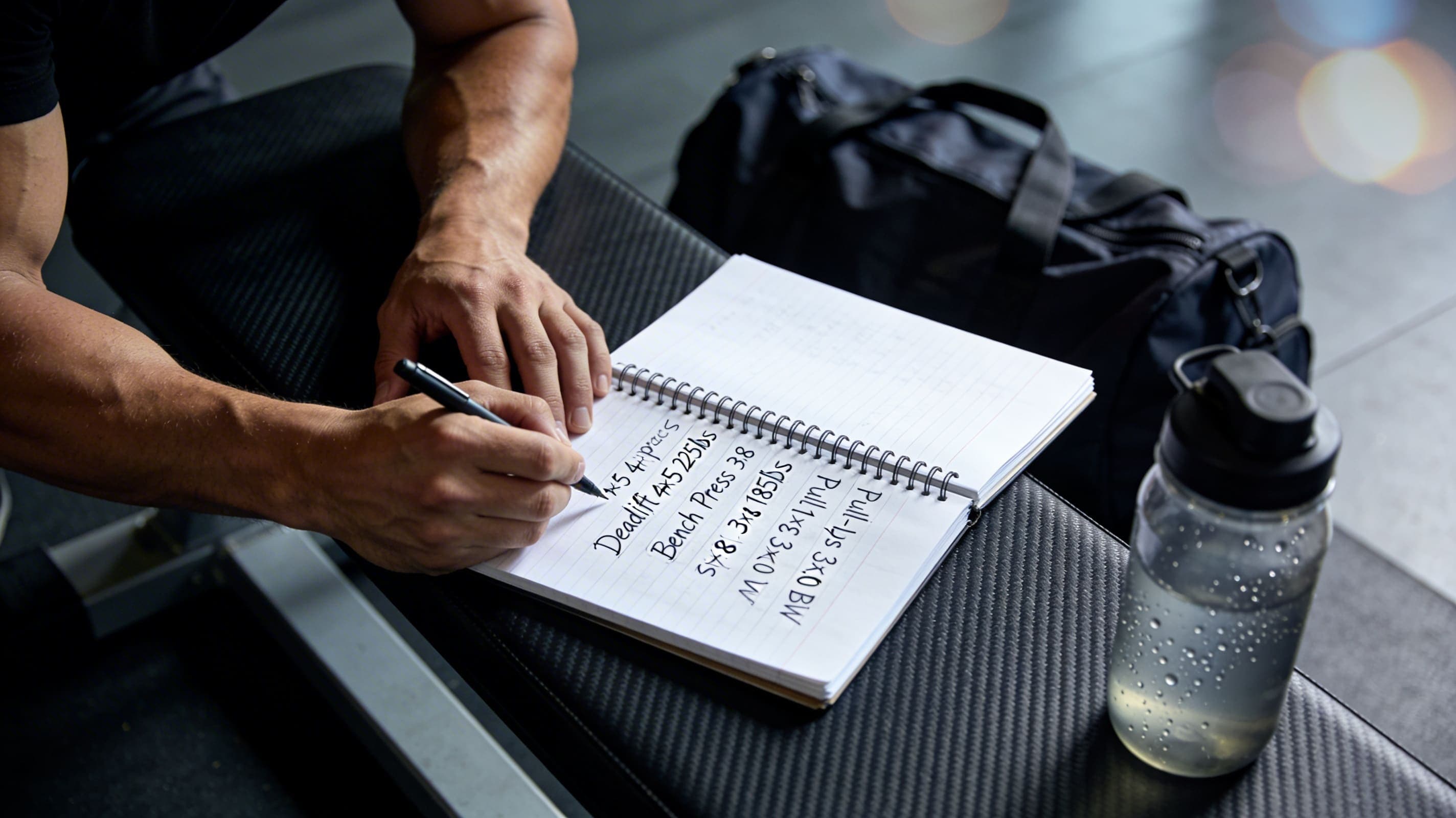
This is progressive overload in action, the principle that actually drives results. Log every set (weight, reps and effort) so you always know what to beat. A workout progress tracker shows instantly whether you're progressing or stuck.
Adjusting reps to your training experience
Beginners (less than 1 year)
Stay mostly between 8 and 15 reps. These ranges give you time to master technique, lower injury risk and still produce fast progress. There's no need to chase 3-to-5-rep squats in your first months.
Intermediate (1 to 3 years)
Add a heavy range (5 to 8 reps) on one or two compound lifts per session and keep 10 to 20 reps for the rest. That variety restarts progress and builds strength and size at the same time.
Advanced (3+ years)
Periodization becomes useful: alternate 4-to-6-week blocks focused on strength (5 to 8 reps) with blocks focused on volume (10 to 20 reps). Muscles don't get "used to" a rep range, but varying the stimulus helps manage fatigue and push through plateaus.
Women and lifters over 40
The same rep ranges apply. Women often tolerate higher reps and shorter rests slightly better and can lean on the 10-to-20-rep range more without losing results. Lifters over 40 may benefit from keeping most work in the 8-to-15 range and limiting very heavy sets to one main lift per session, which keeps joint stress manageable while still providing plenty of tension. In both cases, effort and progression matter far more than the exact number on the program sheet.
Common rep-range mistakes
- Counting reps, not effort: stopping at 12 because the program says 12 when you had 8 more in the tank.
- Same range, same weight forever: no rep range works without progression.
- Trading form for an extra rep: a half rep or a cheated rep doesn't count for the target muscle.
- Thinking high reps "tone" or burn local fat: 20-rep sets don't burn more fat in a specific area. Fat loss depends on your energy balance.
- Ignoring recovery and nutrition: without enough sleep and protein (about 0.7 to 1 g per pound of body weight per day), even the perfect rep range won't deliver.
Nutrition: the final piece of muscle growth
Reps create the signal; nutrition provides the building blocks. To maximize muscle growth, aim for a small calorie surplus (200 to 300 calories above maintenance), protein spread across 3 to 5 meals, and 7 to 9 hours of sleep. If your main goal is size, a structured bulking workout plan puts these rep ranges into a complete program.
Bottom line: how many reps to build muscle?
- Muscle growth happens anywhere from 5 to 30 reps, but the most practical range is 6 to 15.
- End most sets 1 to 3 reps short of failure.
- Go heavy (5-8) on compounds, moderate (8-12) on secondary lifts, higher (12-20) on isolation.
- Aim for 10 to 20 hard sets per muscle per week.
- Use double progression and log every workout.
Want a program that already uses these rep ranges and adjusts your weights session by session? mebody builds a workout plan for your level, logs every set and tracks your progress automatically. Try it free for 14 days, no credit card required.
Ready to progress?
mebody adapts your program in real time based on your performance — no more generic plans.